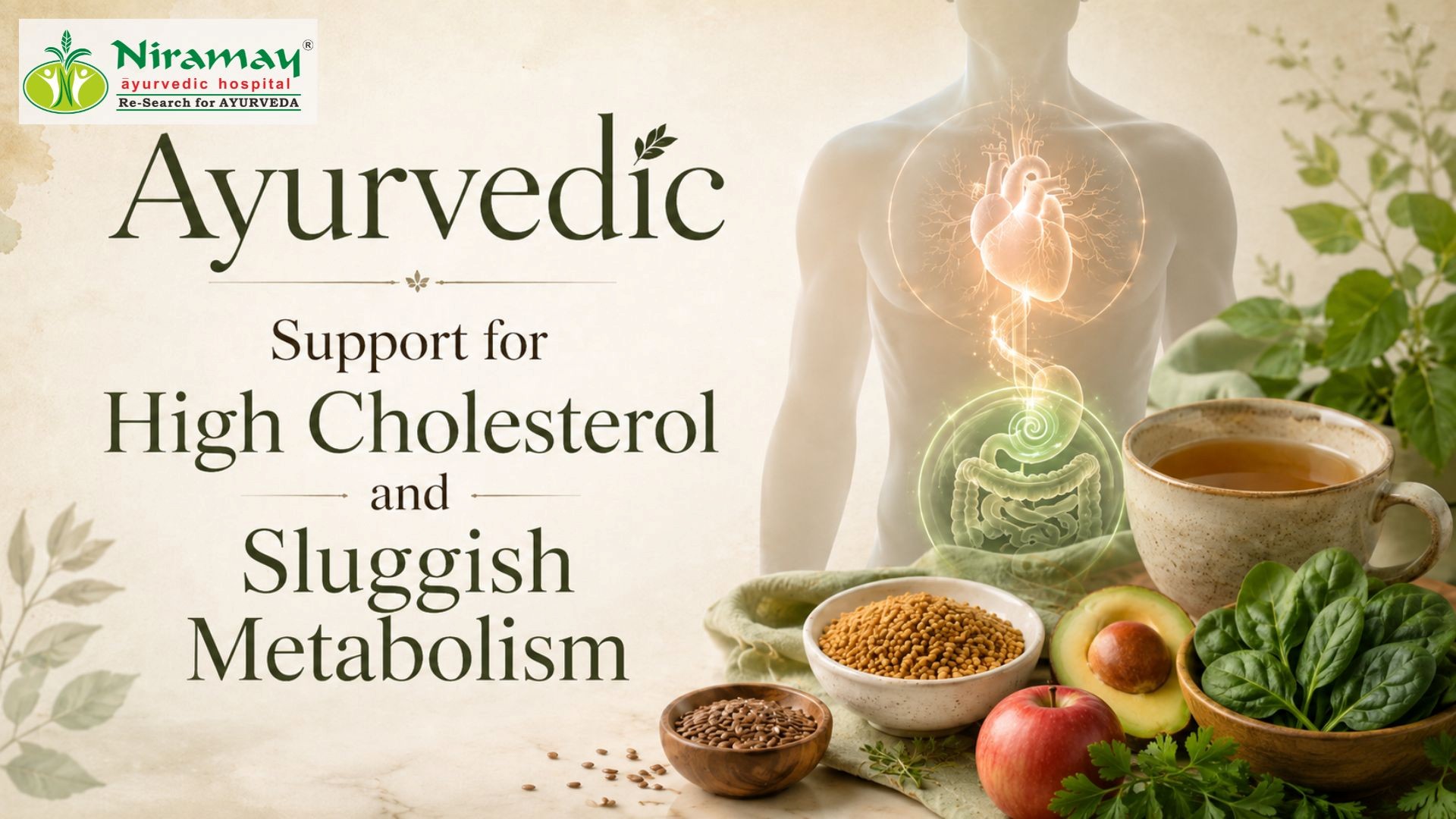
Today high cholesterol is very common and many don’t know it until a blood test shows high levels of LDL, triglycerides or total cholesterol. At first, it often does not cause visible symptoms. Your body may be healthy but excess cholesterol can slowly harm blood vessels and heart health. Along with this, many people also experience slow digestion, a feeling of fullness after eating, weight gain, low energy, bloating, or a slow metabolism.
In Ayurveda, cholesterol and metabolism are viewed in a broader context. The areas covered are digestion, eating habits, liver function, movement, body weight, sleep, stress and toxin build-up in the body. If you are looking for the Best Ayurvedic Treatment in Surat for cholesterol support, the goal should not be just to lower numbers but to improve the way your body digests, processes and utilises food.
Cholesterol care at Niramay Ayurvedic Hospital is planned with diet, correction of lifestyle, Ayurvedic medicines if needed and Panchakarma therapies as per the doctor’s guidance.
What Is High Cholesterol?
Cholesterol is a fatty waxy material in blood. Your body needs some cholesterol to make hormones, for cell function and for digestion. The problem arises when the bad cholesterol, known as LDL cholesterol, is high or when triglycerides are elevated.
Our specialist, Vaidyaratnam Dr. Sandip Patel, being one of the best ayurvedic doctor in Surat says that high cholesterol may be associated with:
Excess intake of oily, fried, processed, and sugary foods
Physical inactivity
Weight gain and obesity
Diabetes or insulin resistance
Thyroid imbalance
Family history
Stress and poor sleep
Slow digestion and irregular eating habits
Many people believe that cholesterol is caused only by fatty foods. However, metabolism, liver function, gut health, and daily routine also play important roles.
Ayurvedic Perspective on Cholesterol and Slow Metabolism
In Ayurveda cholesterol related problems are mostly considered as weak digestion, poor fat metabolism and collection of excess Kapha and Ama. Ama is undigested toxic waste that can be formed when digestion is poor or the body does not process food properly.
When metabolism slows down, a person may experience:
Post-meal heaviness
Bloating
Coated tongue
Low energy levels
Weight gain around the abdomen
Sleepiness after meals
Cravings for fried and sweet foods
Constipation or infrequent bowel movements
Ayurveda focuses on improving Agni (digestive fire). As digestion improves, the body may better process food, support healthy metabolism, reduce heaviness, and maintain better energy levels.
How Can Ayurveda Support Healthy Cholesterol Levels?
Ayurveda is not a quick fix tablet. It works by enhancing your daily habits and body function. A proper plan may include food correction, herbal support, exercise, sleep improvement, stress control and detox therapies if necessary.
When you come to us at Niramay, we being the best ayurvedic hospital in Gujarat, our doctor will check your digestion, body type, lifestyle, reports, weight, bowel habits, sleep, stress level, and any medications you are currently taking.
We provide you Ayurvedic support that may be helpful in:
Better Digestion
Aids the liver to work properly
Easing the bloating and heaviness
Supports healthy fat metabolism
Assisting with weight control
Better bowel movements
Curbing unhealthy cravings
Sustaining lifestyle discipline over time
Patients should never stop prescribed cholesterol or heart medications without consulting their treating physician.
What are Cholesterol-Busting Foods
Food is the first step. If daily eating habits remain unhealthy, no treatment is very successful.
Try to include:
Warm water throughout the day
Light, home-cooked meals
Moong dal, vegetable soups and khichri
Leafy vegetables
Lauki, tori, methi, palak, and neem flower leaves
Whole grains, oats, millets, barley and
Fruits such as avocado, apple, papaya, guava and berries
Flaxseeds, ginger and cinnamon in small quantity
Buttermilk with roasted cumin
Early light dinner
Try to minimise:
Fried snacks
Bakery products
Excess cream, butter, ghee, and cheese
Processed and red meat
Sweetened beverages
Excess sweets
Late-night heavy meals
Reheated and fried foods
Very cold drinks immediately after meals
A simple rule is to eat foods that make you feel light and energetic after digestion rather than heavy and sleepy.
Ayurvedic Daily Routine for Better Metabolism
Little things in your day can make a difference.
Begin your day with warm water. If you experience acidity, do not have tea or coffee on an empty stomach. Breakfast only when you are hungry. Lunch should be your largest meal as digestion is usually stronger in the afternoon. Have a lighter dinner and finish eating at least two to three hours before going to bed.
Get a 20-30 minute walk each day. Even a simple walk after a meal can help with digestion and balance blood sugar. Don’t lie down immediately after eating. Getting your sleep on time Late nights disrupt metabolism and hunger hormones.
Stress is also important. A lot of people eat too much, crave sweets, or reach for fried food when they’re stressed. Simple breathing, yoga, meditation or regular walking can settle the body, says Vaidyaratnam Dr Sandip Patel, known by many patients as the Best Ayurvedic Treatment in Surat.
Role of Panchakarma in Cholesterol & Metabolism
Panchakarma is not spa therapy. It is a medical detox process in Ayurveda and should be done only after proper consultation. Depending upon your body type, digestion, cholesterol level, age, strength and other health conditions our doctor may suggest therapies at Niramay, an Ayurvedic Panchkarma Hospital in Surat.
Some selected therapies may help improve digestion, reduce heaviness, support detoxification and balance kapha for cholesterol and sluggish metabolism. But Panchakarma is not one-size-fits-all. Some patients may require mild internal medication and dietary correction initially. Some may need a detox plan in structure.
Don’t go into a big detox, fast or herbal medicines on your own, especially if you have diabetes, heart disease, kidney problems, liver disease or are on blood thinners.
When to Consult an Ayurvedic Doctor for a High Cholestrol or Sluggish metabolism?
You have high cholesterol or triglycerides in your blood reports
You’re feeling bloated or low on energy
You are gaining weight and eating less
You have a fatty liver, cholesterol.
you have diabetes, thyroid issues or high BP
You want natural support and lifestyle correction
You want to decrease dependence on unhealthy habits
You get confused on what to eat and what to keep away from
Being one of the most trusted Ayurvedic Treatment in Surat, Niramay Ayurvedic Hospital helps patients to know the root lifestyle and digestion related factors behind the cholesterol imbalance. If you are looking for the Best Ayurvedic Hospital in Surat, then choose a place where treatment is done based on reports, proper consultation and safe Ayurvedic practice.
Can Ayurveda Replace Cholesterol Medications?
It depends on your cholesterol, heart risk, age, family history, diabetes, blood pressure, and your doctor’s advice. Some patients with mild cholesterol changes may do better with diet, weight loss, exercise and Ayurvedic support. But those with very high LDL, heart disease, diabetes or strong family history may need modern medicines along with lifestyle care.
Ayurveda can support the body but should not be used to suddenly stop medicines prescribed by doctors. The safest way is integrative and doctor-guided.
Why Niramay Ayurvedic Hospital?
Niramay Ayurvedic Hospital believes in Ayurveda and adopts a patient first approach. The treatment plan is not just about medicines. This includes knowing about digestion, food habits, stress, sleep, bowel movements, weight, medical reports, and long-term health goals.
If you are a patient searching for the Best Ayurvedic Hospital in Gujarat, you should look for a hospital that provides proper diagnosis, safe medicines, Panchakarma guidance, diet planning and follow-up care. Cholesterol control takes consistency, NOT shortcuts.
Basic Checklist to Control your Cholesterol:
Getting Started Today
Walk 20 to 30 minutes every day.
Avoid fried foods and packaged foods
Eat early and have a light dinner.
Add more vegetables and fibre.
Drink hot water.
Cut back on sugar and refined flours
Sleep on schedule
Handle stress
Check your lipid profile regularly.
Before taking herbs consult a qualified Ayurvedic doctor
FAQs
Does Ayurveda reduce cholesterol levels naturally?
Cholesterol management with diet, lifestyle correction, improved digestion, herbal support and Panchakarma when indicated, Ayurveda can help. Best when used regularly and under a doctor’s supervision.
What foods should I avoid if I have high cholesterol?
Avoid fried stuff, bakery products, too much ghee, butter, cream, cheese, sugary foods, refined flour, processed food and heavy meals at night.
Panchakarma for High Cholesterol: Does it Help?
In some patients with slow metabolism, heaviness, poor digestion and Kapha imbalance, panchakarma can be useful. It should be done only after taking consultation from a qualified Ayurvedic Panchakarma Centre in Surat.
If I start Ayurveda can I stop my cholesterol medication?
Negative. Don’t stop taking prescription cholesterol medicine without talking to your doctor. “Use Ayurveda as supportive care, but changes in medicine need to be medically supervised.
How long does it take to treat cholesterol with Ayurveda?
It depends on your reports, weight, lifestyle, digestion and consistency. For many patients, it takes a few months of regular diet, routine, and treatment support to see meaningful changes.
High cholesterol, is it only caused by fatty food?
No, high cholesterol can also be linked to lack of exercise, stress, poor sleep, thyroid problems, diabetes, genetics, weight gain, and a slow metabolism.