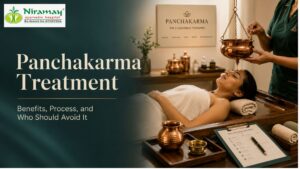

Knee pain has a way of shrinking your world. Stairs feel taller. Sitting cross legged starts looking like a bad idea. And that first step in the morning? Sometimes it’s a little shock to the system, like your knee needs a minute to “boot up.”
Ayurveda looks at this kind of pain a bit differently. It does not treat the knee like an isolated hinge that needs oiling. It looks at the whole pattern: dryness, stiffness, swelling, digestion, sleep, stress, and how your body recovers after a long day. For many people with arthritis, that big theme is wear and dryness. In Ayurvedic language, that often points to vata being aggravated.
Let’s hear from our experts at Niramay Ayurvedic Hospital, one of the best ayurvedic hospitals in Surat, about what that means in practical terms, and what you can actually do at home, plus when you should get hands on help.
What Ayurveda Is Really Trying to Fix
If your knees feel creaky, cold, stiff, or worse in dry weather, Ayurveda usually thinks “vata.” If they feel hot, inflamed, red, and angry after activity, that can lean more “pitta.” And if there’s heaviness, puffiness, sluggish movement, and the knee feels thick or swollen, that’s often “kapha.”
You do not need to label yourself perfectly. The simple, real-world takeaway is this: most chronic knee pain routines work better when they reduce dryness, calm inflammation, and build strength without irritating the joint.
Oils for Knee Pain: What People Actually Use
Oil massage sounds almost too simple until you try it for a week and notice your knees feel less “rusty.” The sensory part matters here. Warm oil on a stiff knee is different from rubbing in a cold gel. You feel your body soften. The knee looks less dull, more alive.
Our Specialist Vaidyaratnam Dr. Sandip Patel, considered as one of the best ayurvedic doctors in Surat, who is consulting at Niramay Ayurvedic Hospital, suggest these Ayurvedic oils used for knee pain:
Mahanarayana oil
This is a classic. People use it for joint pain, stiffness, and soreness. It has a strong herbal smell that can feel medicinal in a good way.
Dhanwantharam oil
Often used for vata related pain and weakness. It tends to feel nourishing, not sharp.
Ksheerabala oil
Usually chosen when nerves and tenderness are involved, or when pain feels “zingy.”
How to use oil at home:
- Warm a small bowl of oil by placing it in hot water for a minute or two.
- Massage the knee gently for 8 to 10 minutes. Circles around the kneecap, then long strokes above and below it.
- Let it sit for 20 minutes if you can.
- Follow with a warm shower or a hot towel compress.
Small note: if your knee is clearly hot and inflamed, skip heavy massage that day. Use a lighter touch, or focus on warm compress only. More rubbing is not always better.
Ayurvedic Therapies: The Ones People Swear By
The best ayurvedic treatments in Surat need an expert’s supervision. They are hard to replicate at home because they are hands on and messy. But they can be worth it, especially if you feel stuck.
This is a popular one for treating knee pain according to the experts at Niramay Ayurvedic Hospital, an ayurvedic panchkarma hospital in Surat. A dough ring is placed around the knee and warm medicated oil is pooled inside it for a set time. The warmth sinks in slowly. It is soothing in a very specific way, like your joint finally gets to relax.
Abhyanga
Full body oil massage. It sounds unrelated, but many people with knee pain also hold tension in hips, calves, and lower back. When the whole chain loosens up, the knee often complains less.
Swedana
Herbal steam or fomentation. This is basically targeted heat therapy, but done in an Ayurvedic style. If your knee likes warmth, this can feel amazing.
Lepam
Herbal paste applied over the joint. This is commonly used when swelling and discomfort are present.
A good clinic will assess what your knee looks and feels like, not just hand you a standard package. If someone pushes the same therapy for every person, I would be cautious.
Exercises and Movements That Support the Knee
According to the doctors consulting at Niramay Ayurvedic Hospital, one of the best ayurvedic hospitals in Gujarat, oils and therapies help, but your knees also need strength. Arthritis loves weak muscles. It feeds on instability. The goal is not intense workouts. The goal is steady support around the joint.
Try these, slowly, and stop if pain spikes.
Quad tightening
Sit with your leg straight. Tighten the thigh muscle and press the knee gently toward the floor. Hold 5 seconds. Repeat 10 times each side.
Heel slides
Lie down and slide your heel toward your hips, then back out. Smooth motion. No forcing. Do 10 to 12 reps.
Straight leg raises
Lie down, one knee bent, the other leg straight. Lift the straight leg to the level of the bent knee. Hold 2 seconds. Do 8 to 10 reps.
Supported chair squats
Stand in front of a chair, feet hip width. Sit back slowly and stand up. Keep it shallow. Even 6 reps is fine if done with control.
Gentle yoga options
Tadasana, supported by Virabhadrasana with short stance, and simple hamstring stretches can help. Avoid deep knee bends on flare up days.
Also, walking counts. Especially if it is easy, regular, and not done with a “push through it” attitude.
A Few Realistic Tips That Matter More Than People Admit
Warmth helps many arthritic knees. Cold floors, cold water, and long periods of stillness often make things worse. So keep your knees warm, take movement breaks, and do not sit frozen in one position for hours.
And watch your weight, gently. Even a small reduction can change the load on your knees. Not a fun topic, but it is true.
When You Should Not Self Treat
If your knee is suddenly swollen, hot, very painful, or you cannot bear weight, get medical help. Same if there is fever, redness spreading, or a history of injury. Ayurveda can support recovery, but you do not want to miss something urgent.
If you try a solid routine for a few weeks and nothing improves, that is also a sign. You may need a proper evaluation, imaging, or a supervised therapy plan.
Knee pain can be stubborn, but it is not always hopeless. The best Ayurvedic approach feels grounded: warm oil, smart therapies, steady movement, and patience that is actually practical. Not magical. Just consistent.