
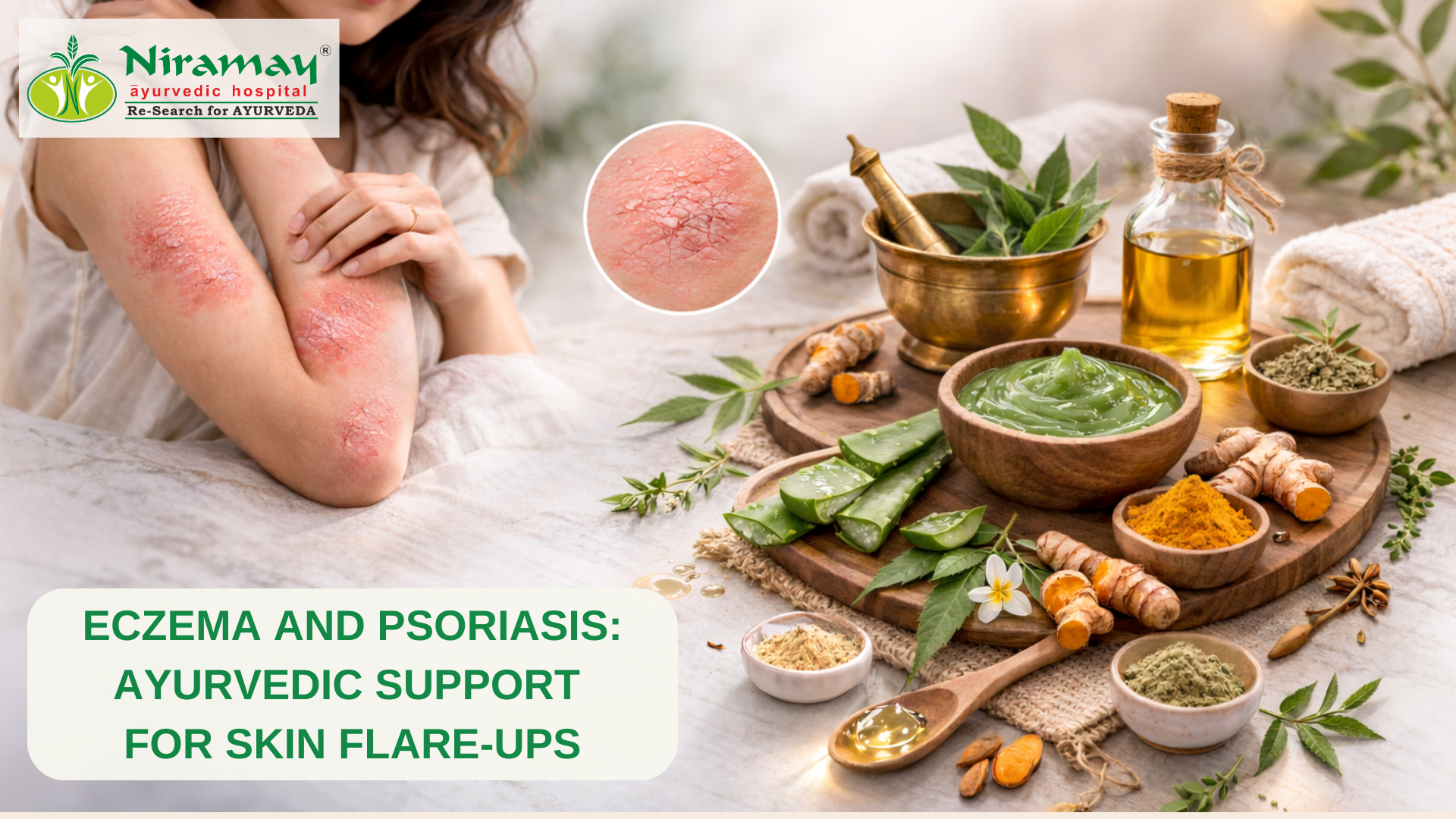
Eczema or psoriasis is not just “a skin thing.” It’s the itch that wakes you up at 2 a.m. It’s the tight, dry pull when you smile. It’s the moment you catch flaky patches on a black T-shirt and sigh because, come on.
And the weird part? Some days your skin behaves. Other days it’s angry for no obvious reason. Weather changes, stress, a new soap, a spicy meal, a long flight, that one week where sleep vanished. Skin flare-ups don’t always follow logic, but they do have patterns.
Before we get into Ayurveda, our specialists, Vaidyaratnam Dr. Sandip Patel from Niramay Ayurvedic Hospital, considered as one of the best Ayurvedic hospitals in Gujarat, shares a quick note: Eczema and psoriasis can look similar to many other skin issues. So, it makes sense to be sure what you’re treating first. Once you know what’s going on, Ayurvedic support can fit in much more smoothly.
Eczema vs Psoriasis: Why They Feel So Different
Eczema often shows up as dry, itchy, inflamed skin. It can look like rough, irritated patches that feel hot or stingy, especially after scratching. The itch can be intense and the skin can get weepy or crusty during a bad flare.
Psoriasis is usually more “structured.” Thicker plaques, clearer borders, and that classic silvery scaling. It can feel tight, sometimes painful, and it loves places like elbows, knees, scalp, and lower back. Some people also get nail changes or joint pain, which is a bigger deal and worth checking early.
They’re different conditions, but they share a common theme: inflammation, irritation, and a skin barrier that’s struggling.
The Ayurvedic Lens on Skin Flare-Ups
Ayurveda talks about skin health through balance. It focuses on digestion, heat, dryness, stress load, sleep, and what your daily routine looks like.
Being one of the best Ayurvedic doctors in Surat, Vaidyaratnam Dr. Sandip Patel, links eczema with dryness and sensitivity that often aligns with Vata qualities. Think rough, dry, itchy, quick to flare.
Psoriasis often gets linked with excess heat and inflammation, which is more Pitta-like. Think burning, redness, and irritation that feels “hot” on the skin.
Sometimes there’s Kapha involved too, especially if there’s thick scaling, heaviness, or oozing. Real life is messy, so people rarely fit one neat box.
What I like about this approach is the focus on triggers you can actually work with. Food. Routine. Stress. Environment. Not just chasing symptoms with a new cream every week.
Food Support That Doesn’t Feel Like Punishment
Experts from Niramay Ayurvedic Hospital, an Ayurvedic Panchkarma hospital in Surat, treat this in a practical way. They don’t promote unrealistic “Perfect diets”. Instead they focus on identifying and reducing flare triggers and building steady, manageable daily habits.
Many people notice flare-ups with very spicy foods, deep-fried meals, alcohol, and heavy sugar. Not because these foods are evil. More because they tend to crank up inflammation, heat, and gut irritation. If your skin already feels like it’s on edge, that extra push can show up fast.
Try adding more cooling, simple foods for a few weeks and see what happens. Think cucumbers, cooked greens, gourds, pomegranate, pears, soaked raisins, and easy dals. Warm, home-cooked meals usually land better than random snacking. Your skin often reflects how chaotic your eating has been. It’s annoying, but true.
And hydration matters, but not in the preachy way. If your lips are dry and your skin feels papery, your body is giving feedback.
Ayurvedic Herbs People Commonly Use
This part needs care. Herbs can help, but they can also clash with medications or not suit your body. If you’re pregnant, breastfeeding, have liver issues, or are on long-term meds, talk to a qualified clinician before taking anything regularly.
That said, here are a few Ayurvedic herbs that are commonly used by the doctors at Niramay Ayurvedic Hospital, well-known as one of the best Ayurvedic Hospitals in Surat, for skin support:
Neem is often used for its cleansing and soothing reputation, especially when skin feels inflamed or breakout-prone.
Manjistha is traditionally used to support blood and skin clarity. People often reach for it when they feel their flare-ups are “internal” and recurring.
Guduchi is known for cooling and immune support in many Ayurvedic traditions.
Turmeric is the obvious one. Useful, but not magic. Also, some people’s stomachs do not enjoy a lot of it.
The main point: herbs work best when they match the pattern. Taking random combinations because a reel said so is how people waste money and time.
External Care: Oils, Baths, and Simple Skin Comfort
If your skin is flaring, it usually wants gentleness. Hot showers feel amazing in the moment, then your skin feels worse after. That “tight after-bath” feeling is a clue.
For eczema-type dryness, some people do well with light, warm oil application before bathing, then a lukewarm rinse, then moisturizer while the skin is still slightly damp. Sesame oil is traditional, but not everyone tolerates it. Coconut oil can feel soothing for some, but on some people it can clog or irritate. Patch test. Always.
For psoriasis-type scaling, gentle softening helps. Oat baths, lukewarm water, and thick moisturizers can reduce that sandpapery feel. Scrubbing hard usually backfires. You might remove scale, but you also trigger more irritation.
Also, watch your soaps and detergents. If your soap smells like a perfume counter, your skin may not love it.
Lifestyle Support That Actually Makes a Difference
This is the boring part that works.
Sleep: When sleep is off, flare-ups often follow.
Stress: Not “avoid stress” because that’s cute. More like building a stress outlet. Walking, stretching, breathwork, journaling, whatever you’ll actually do.
Consistency: Skin likes routine. Same cleanser, same moisturizer, same bedtime, same simple meals most days. Your skin calms down when your system calms down.
And if your flares keep returning, consider taking guidance with an Ayurvedic specialist from Niramay Ayurvedic Hospital, who can give you the best Ayurvedic treatment in Surat. That’s where Ayurveda shines, because your triggers might not be the same as your friend’s.
Skin flare-ups are exhausting, but they’re also information. Your body is talking. The goal isn’t perfect skin forever. It’s fewer flare days, faster recovery, and feeling like you’re not at war with your own body.