
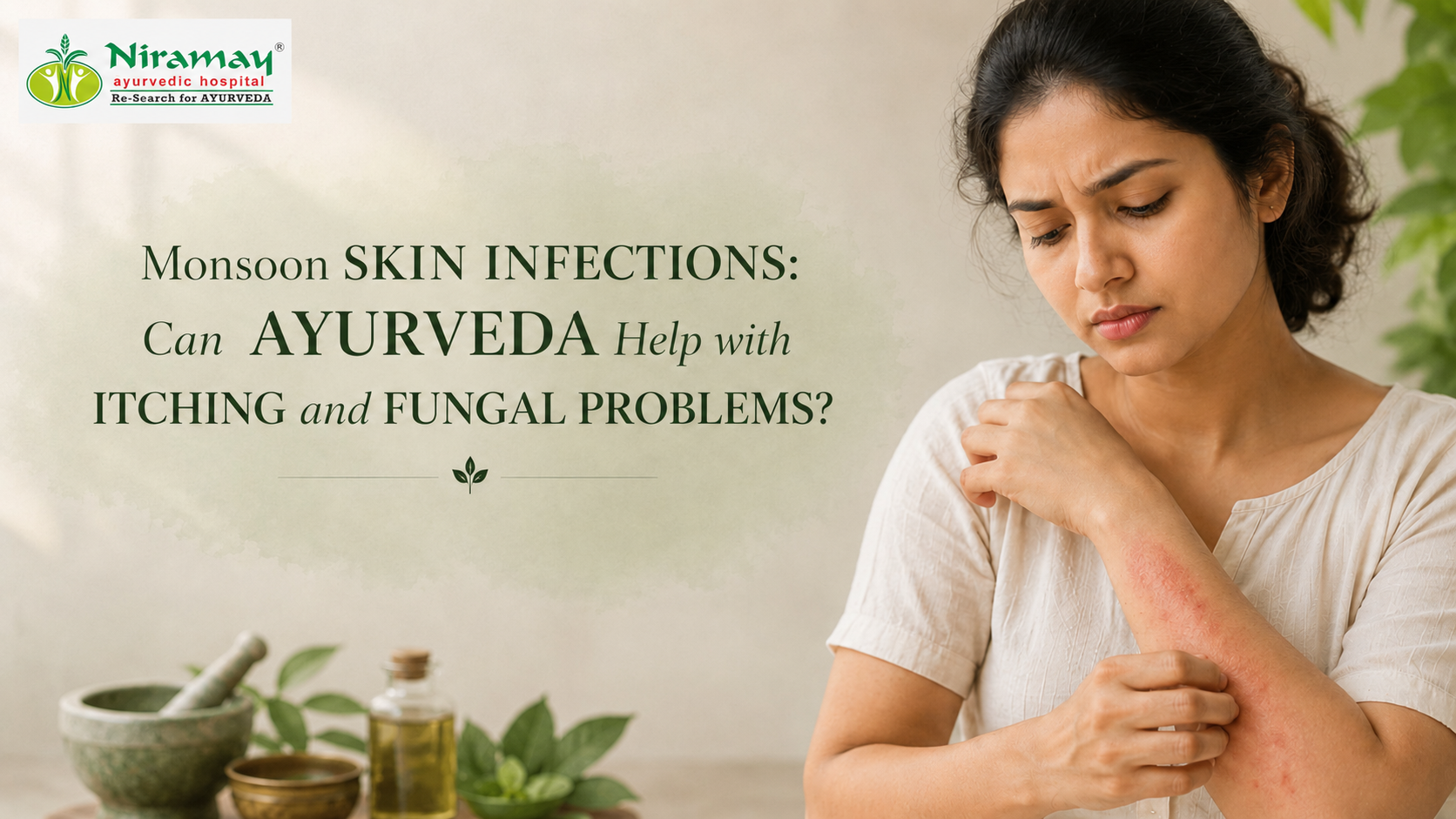
The monsoon season is something that many of us look forward to. The cool breeze, fresh rain and green surroundings make everything feel refreshing. But while the weather is really pleasant, your skin might not feel the same way. If you have ever noticed itching between your toes or red rashes during the rainy season, you are not alone. A monsoon creates the perfect conditions for bacteria and fungi to grow. Humidity, damp clothes and wet shoes can easily lead to infections if you are not careful. The best part is that Ayurveda takes a holistic approach to skin health. Instead of just focusing on the symptoms, it looks at what is happening inside your body.
Why does the Monsoon cause more Skin Problems?
Think about how your skin feels after you have been caught in the rain or spent a day in humid weather. It often feels sticky, sweaty and uncomfortable. Now just imagine that moisture staying on your skin for hours. It’s exactly the kind of environment that fungi and bacteria thrive in. Areas like your feet under arms and neck might stay damp for longer, making them more likely to develop infections. You can visit us at Niramay Ayurvedic Hospital, the most trusted and reputed Ayurvedic hospital in Gujarat, and understand how Ayurveda can help you in treating such skin problems.
What are the Signs of Skin Problems in Monsoon?
You might think a little itching is nothing to worry about. But sometimes that’s how a fungal infection begins.
You should pay attention if you notice:
● Constant itching that doesn’t go away
● Red or circular rashes
● Burning or irritation
● White, flaky skin
● Peeling skin between the toes
● Small blisters
● Unpleasant smell from infected areas
For a more personalised approach, you can consult us at Niramay Ayurveda Hospital, an Ayurvedic Panchkarma hospital in Surat which provides trusted ayurvedic consultation, treatment, and procedures to treat your problem from its root cause.
How does Ayurveda look at Skin Health?
One thing that makes Ayurveda different is that it doesn’t see the skin as a separate part of your body. According to doctors at the best Ayurvedic Hospital in Gujarat, healthy skin starts from within. During the rainy season digestion naturally becomes weaker. When digestion is not working really well, toxins can build up in your body. Along with the imbalance in the doshas these toxins might show up as skin problems like itching or rashes. That is why Ayurvedic treatment doesn’t stop at reducing itching; it also focuses on improving digestion and balancing your body and supporting long-term skin health.
Can Ayurveda help with itching and fungal infections?
Yes, getting the best Ayurvedic treatment in Surat from an experienced doctor can help manage seasonal skin problems through a combination of customised treatments and herbal medicines. Every person’s body is different. After understanding your symptoms and body type, an Ayurvedic doctor can recommend a treatment plan that suits your needs.
Herbal medicines
Ayurveda uses time-tested herbal formations that are radically known for supporting healthy skin. Depending on your condition, these medicines might sometimes help soothe irritation and reduce etching.
Herbal oils and external therapies
Occasionally your skin needs care from the outside. Medicated oils and herbal pastes might be recommended to calm irritated skin and keep your affected area healthy. These treatments are selected according to your skin condition.
Improving digestion
ImproBut Ayurveda links digestion and skin health closely. Digestion and skin health are closely connected. If your digestion is weak, skin problems might become more frequent. That’s why doctors suggest small dietary changes along with treatment to improve your overall health.
Food Matters more than you Think
During the monsoon it’s easy to crave fried snacks and spicy street food. No doubt enjoying them occasionally is really fine, but eating too much oily or heavy food might affect your digestion. Ayurveda generally recommends eating freshly cooked meals, seasonal vegetables and light and easily digestible foods. Simple food choices can help support your healthy skin.
Simple Monsoon Skincare tips you can follow everyday
The best part is that preventing skin infection doesn’t have to be complicated. You must always dry your skin properly after getting wet in the rain, especially between your toes and skin folds. Change out of wet clothes as soon as possible instead of staying in damp clothes for hours. You must wear loose cotton clothing whenever you can. It allows your skin to breathe and reduces sweating. If you wear shoes for a long time, wash and dry your feet properly every day and change your socks regularly.
When Should You See an Ayurvedic Doctor?
Sometimes home care is enough, but there are situations where professional advice becomes important.
You should visit the experienced and expert Ayurvedic doctor in Surat if:
● The itching becomes severe.
● The rash keeps spreading.
● You notice swelling or pus.
● The infection keeps returning every few weeks.
● The discomfort affects your daily routine.
● Over-the-counter creams aren’t helping anymore.
Monsoon skin infections are really common, but they don’t have to become a regular part of every rainy season. Paying attention to your hygiene and keeping your skin dry and eating well can make a difference. Ayurveda offers a gentle and holistic way to take care of your skin by supporting your body’s natural balance.
FAQs
1)Why do fungal infections become more common during monsoons?
The combination of humidity and damp clothes creates the perfect environment for fungi to grow, making skin infections more common.
2) Can Ayurveda help with itchy skin during the monsoon?
Ayurveda might help manage itching through customised herbal medicines and external therapies.
3) Is panchakarma recommended for skin problems?
In some cases yes. After evaluating your condition, an Ayurvedic doctor might recommend patrikarma to support detoxification and overall skin health.
4) How can I prevent fungal infections naturally?
You must keep your skin clean and dry. Furthermore, you should wear breathable cotton clothes and change wet clothes quickly and avoid sharing personal items like towels and socks.
5) When should I consult the best Ayurvedic doctor in Surat?
If you are itching or fungal infections keep returning or spreading quickly, it’s best to consult an experienced doctor for proper evaluation and treatment.