Life today moves fast. Between work deadlines and unhealthy eating habits, many people feel physically and mentally exhausted. You might have experienced days when you feel drained even after resting or sluggish despite eating well. In such situations you might start looking for natural ways to restore balance and improve your overall well-being. This is precisely where Ayurveda introduces the concept of Panchakarma. Panchakarma is one of the most well-known therapies in Ayurveda, often referred to as the cleansing and rejuvenation process. Panchakarma focuses on helping your body eliminate accumulated ama [metabolic waste] and restore balance by the body’s natural cleansing process. Connect with us at Niramay Ayurvedic Hospital, The Best Ayurvedic Hospital in Gujarat to learn more and experience the benefits of Panchakarma.
What Is Panchakarma?
The word “Panchakarma” comes from Sanskrit:
● ‘Pancha’ means ‘five’.
● ‘Karma’ means ‘action’ or ‘procedure’.
Together Panchakarma refers to five therapeutic procedures used in Ayurveda to cleanse your body and restore balance. According to Ayurvedic principles, poor digestion, unhealthy food choices and lifestyle habits might lead to the accumulation of toxins in your body. With time these toxins might disrupt the balance of doshas, which are believed to govern various body functions. Panchakarma aims to remove these accumulated toxins and support your body’s natural healing process. Today, many people visit Ayurvedic Panchkarma Hospital in Surat to explore Panchakarma.
Why Is Panchakarma So Popular?
Modern lifestyles often leave little room for self-care. Many people experience the following:
● Fatigue
● Digestive discomfort
● Poor sleep
● Stress
● Low energy levels
Panchakarma is prominent because it takes a holistic approach instead of focusing only on symptoms or looks at your overall health. The goal is not simply to treat a condition but to help restore balance in your body and mind.
Understanding The Five Main Panchakarma Therapies
Panchakarma consists of five main Ayurvedic cleansing procedures, but not every patient needs all five therapies. The treatment plan is decided after understanding your body constitution, health condition, digestion, age, strength, medical history, and the level of imbalance in the body.
At Niramay Ayurvedic Hospital, Vaidyaratnam Dr Sandip Patel, the best and experienced Ayurvedic doctor in Surat, carefully evaluates each patient before recommending the right Panchakarma therapies. This personalized approach ensures that the treatment is suitable, safe, and aligned with your body’s true needs.
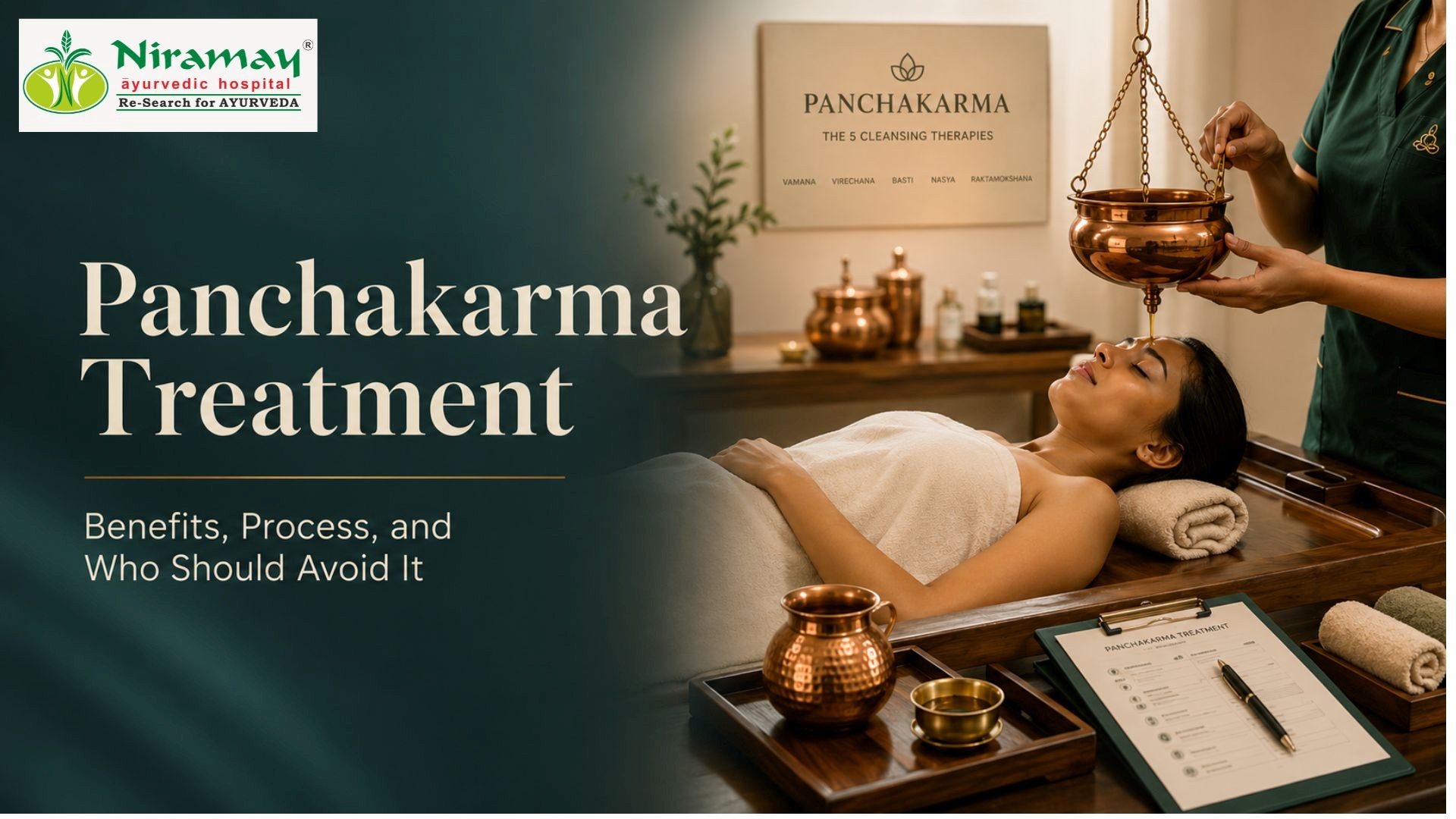
There are five major types of Panchakarma procedures:
Vamana: A type of therapeutic cleansing mainly used to eliminate excess Kapha from the body. It can be proposed in specific conditions with congestion, heaviness, respiratory imbalance or certain metabolic disorders.
Virechana: A controlled purgation therapy to help cleanse excess pitta from the body. It is often considered for skin concerns, acidity, liver imbalance, and digestive problems, depending on the patient’s condition.
Basti: An Ayurvedic therapeutic procedure of great importance in Ayurveda in which medicated oils and herbal decoctions are administered through the rectal route under medical supervision , especially for Vata-related problems. It may be useful for conditions associated with joint pain, constipation, dryness, nervous system imbalance and chronic lifestyle disorders.
Nasya (Nasal Therapy): A nasal therapy in which medicated oils or herbal preparations are administered through the nose. It is commonly used for issues pertaining to sinus, headache, allergies, sleep, stress and head-neck region imbalances. It should always be performed under the guidance of a qualified ayurvedic physician .
Raktamokshana: A special therapeutic bloodletting procedure to be employed only in selected cases under expert supervision. It may be considered for some skin diseases, inflammation or blood-related imbalances when warranted.
Each Panchakarma therapy has its own purpose, and proper Ayurvedic assessment is required to choose the right one. Therefore, Panchakarma should always be undertaken under the guidance of an experienced Ayurvedic doctor and not as a general detox routine.
Panchakarma Is Way More Than Just Five Therapies
Many people believe that Panchakarma means beginning with cleansing therapies right away. Truth be told, Panchakarma is an integrated Ayurvedic procedure comprising preparation, cleansing, recuperation and rejuvenation. The body is treated in a safer way, and this step-by-step approach personalises the treatment.
When you look for the best Ayurvedic treatment in Surat, it is also important to know that Panchakarma is not a one-day detox or an overall spa therapy. It is a planned Ayurvedic treatment designed as per your body constitution, digestion, strength, age, health condition and the imbalance that needs to be corrected.
1. Preparation –
The actual Panchakarma treatment cannot begin until the body has been prepared. This phase helps to loosen toxins that have accumulated and to draw them toward the digestive system so they can be eliminated more efficiently.
Snehana (Oil Massage)
It may involve either the internal administration of medicated ghee or the external application of medicated oils through massage. It softens the body tissues, lubricates the channels, and prepares the body for deeper cleansing.
Swedana (Sudation)
‘Swedana’ means therapeutic sweating. After oil therapy steam or heat treatment may be given to induce sweating. This helps to open body channels, increase circulation and support the movement of toxins to elimination.
2. Panchakarma Procedures-
The chosen Panchakarma therapy is carried out under the supervision of an expert when the body is well prepared. Depending on the condition of the patient, the therapy may include Vamana, Virechana, Basti, Nasya or Raktamokshana.
Not all patients will need all five therapies. The correct procedure is chosen following a detailed consultation. Therefore, it is important to get guidance from the experienced and best Ayurvedic doctor in Surat, as the therapy should be designed according to your body type, digestive strength, medical history and current health issues.
3. Phase of Recovery-
The treatment alone is only part of the recovery phase. The digestive system is sensitive after cleansing and needs time to regain its strength. After the treatment, Ayurveda recommends a special diet called **Samsarjana Krama** where a light diet is introduced to regular meals slowly.
At this stage you may be advised to avoid heavy, oily, spicy, packaged or hard-to-digest foods. Post-Panchakarma, the body recovers well with proper rest, warm meals, hydration and a calm routine.
4. Rejuvenation and Lifestyle Advice-
After the cleansing and recovery stages, the Ayurveda treatment is followed by the strengthening of the body. This may include Rasayana support, herbal formulations, correction of diet, sleep, yoga, breathing practices, and lifestyle changes.
Panchakarma is intended to detoxify the body and restore balance, improve digestion, boost immunity and reduce the chances of recurring health issues. The best results from a well-planned Panchakarma treatment are achieved when it is followed up with the right daily routine and long-term lifestyle correction.
How to Choose the Right Ayurvedic Centre for Ayurvedic Treatment In Surat
The success of Panchakarma depends greatly on proper assessment and expert supervision. When selecting an Ayurvedic centre, please consider the following:
● Qualified doctors
● Personalized treatment plans
● Hygienic facilities
● Experienced therapists
● Authentic Ayurvedic practices
Many individuals prefer to seek treatment at the best Ayurvedic Doctor in Surat for comprehensive and individualised care.
Potential Benefits Of Panchakarma
Panchakarma aims at supporting cleansing, balance and overall health. Its advantages can depend on your body type, health condition, lifestyle, and the therapies chosen by the Ayurvedic doctor.
Promotes natural detoxification: Panchakarma therapies can assist the body in flushing out built-up toxins through systematic Ayurvedic cleansing.
Digestive health: It can help for better digestive fire, less heaviness and better processing of food in the body.
Helps to balance doshas : Panchakarma is designed to correct imbalance in Vata, Pitta and Kapha as per the patient’s condition.
May help promote a healthier metabolism: Panchakarma may help support healthier metabolism by improving digestion and lifestyle habits.
May reduce body heaviness: Some feel relief from bloating, sluggishness and feeling of heaviness after proper treatment with proper guidance.
Supports joint and muscle health: Some therapies may assist in relieving stiffness, dryness and discomfort associated with Vata imbalance.
Stress management: Oil massage, steam therapy and Shirodhara can help in relaxation and better balance of the nervous system.
Supports skin health: Panchakarma’s focus on digestion, detoxification and internal balance may help with some recurring skin problems.
Improves sleep quality: A properly planned Panchakarma routine helps to soothe the body and encourages better sleeping habits.
Encourages lasting lifestyle correction: Panchakarma is frequently followed by diet, routine and wellness advice that helps patients sustain better health after treatment.
Who Should Avoid Panchakarma?
Even though Panchakarma offers many potential benefits, it is not suitable for everyone. Panchakarma should not be performed without proper ayurvedic assessment.
It may be postponed or modified in:
● Pregnancy
● Menstruation (certain procedures)
● Acute fever or active infections
● Severe weakness or dehydration
● Immediately after surgery
● Very young children or elderly patients (unless specifically advised)
● Uncontrolled medical emergencies
Always undergo evaluation by a qualified Ayurvedic physician before treatment.
Why Choose Niramay Ayurvedic Hospital?
At Niramay Ayurvedic Hospital, every Panchakarma treatment is planned after a detailed Ayurvedic assessment. Our focus is on authentic therapies, personalized treatment protocols, experienced medical supervision, and holistic patient care to ensure a safe and effective healing experience.Conclusion
Conclusion-
Panchakarma is more than a detoxification therapy—it is a comprehensive Ayurvedic approach that aims to restore the balance of the doshas, support the body’s natural healing processes, and promote long-term health and well-being. As every individual has a unique constitution and health condition, Panchakarma should always be planned after a thorough Ayurvedic assessment.
At Niramay Ayurvedic Hospital, we are committed to providing authentic Panchakarma therapies with personalized treatment plans, experienced medical supervision, and compassionate patient care. Our goal is to help every patient achieve better health through the timeless principles of Ayurveda.
Experience the healing power of authentic Ayurveda with safe, personalized, and holistic Panchakarma care at Niramay Ayurvedic Hospital.
FAQs
What is Panchakarma treatment in Ayurveda?
Absolutely the traditional Ayurvedic cleansing and rejuvenation process, which includes 5 therapeutic procedures aimed at restoring balance in your body.
How long does Panchakarma treatment take?
The duration depends on your individual health needs. Some programs last a few days while others might continue for several weeks.
Is Panchakarma helpful?
Most Panchakarma therapies are generally well tolerated when performed under expert supervision.
Who should avoid Panchakarma?
You should avoid Panchakarma if you are pregnant or you have acute illnesses or certain medical conditions.
Where should you undergo Panchakarma treatment?
For safety and to get full benefit, it is advisable for you to seek treatment at an experienced and trusted Ayurvedic Panchakarma hospital or a reputable centre with qualified experts.