
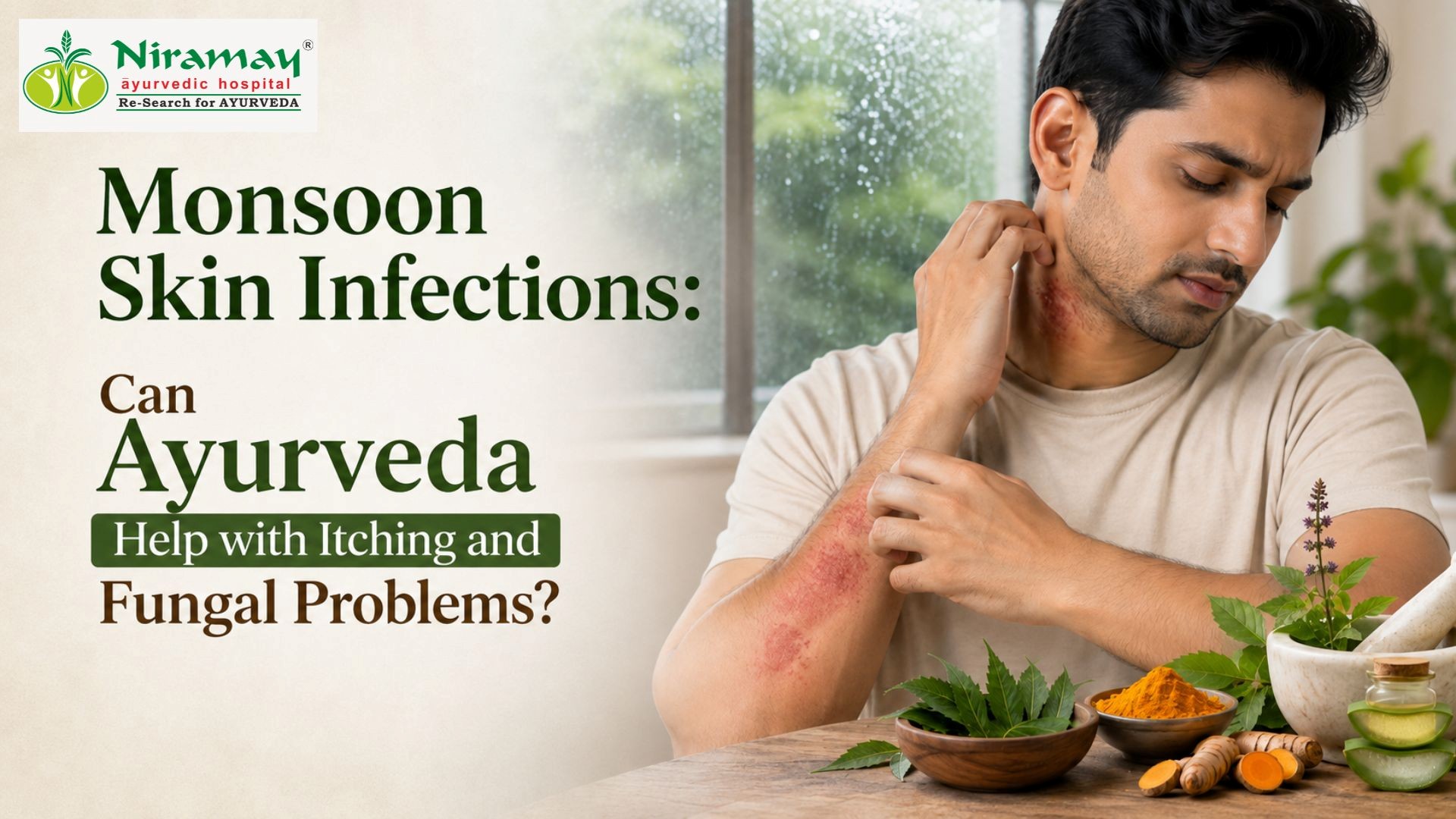
The monsoon season brings welcome relief from the summer heat, but it can also increase the risk of various skin problems. The weather feels pleasant, and everything around feels fresh and green, but your skin may face a different challenge. “Have you ever noticed that itchy rashes or fungal infections become more common during the rainy season?” If yes, you are truly not alone. The combination of humidity, sweat and damp clothing creates the perfect environment for bacteria to grow. A small itch between the toes or a rash around your skin folds might seem minor at first. But if ignored, these problems can become persistent and sometimes difficult to manage. Today a lot of people looking for natural skin care solutions visit us at Niramay Ayurvedic Hospital, as it is considered the Best Ayurvedic Hospital in Gujarat to explore holistic approaches for seasonal health concerns, including skin problems that appear during monsoon.
Why Do Skin Infections Increase During Monsoon?
The monsoon creates the ideal environment for fungi and bacteria to multiply. The air remains humid; sweat doesn’t evaporate easily, and moisture often stays trapped on the skin. This combination can lead to several skin concerns.
Common reasons behind monsoon skin infections include:
- Excess sweating
- High humidity levels
- Wearing wet clothes for long periods
- Poor drying of the skin
- Tight clothing
- Walking in dirty water
- Reduced sunlight exposure
Certain areas of the body are more prone to infections because they retain moisture more easily.
These include:
- Feet and toes
- Groin area
- Underarms
- Neck folds
- Under the breasts
- Waistline
Common Skin Problems During Monsoon
Fungal Infections
Fungal infections are among the most common skin issues during monsoon. They commonly affect warm, moist areas such as the groin, feet, underarms, and skin folds. Some common symptoms include red patches and persistent itching. Common fungal infections include ringworm , Athlete’s foot and jock itch. If left untreated, fungal infections might spread to nearby areas.
Itchy Skin
Humidity can make your skin feel sticky and uncomfortable. Sweat combined with dirt, microbes, and prolonged moisture may irritate the skin and cause itching. Constant scratching can also damage the skin barrier and increase the risk of infection.
Heat Rash
Blocked sweat glands can cause tiny red bumps that itch or sting. Heat rash is especially common in kids and people who sweat heavily.
Understanding Skin Health Through Ayurveda
According to Ayurveda, healthy skin reflects the overall balance within your body. Skin problems often occur when your body’s doshas become imbalanced. Pitta imbalances are associated with heat and transformation in your body. When aggravated, it might contribute to redness and even a burning sensation. Kapha is linked to moisture and heaviness. Excessive oil might lead to oily skin and excessive moisture. It focuses on restoring balance through diet and herbs. To support your skin and overall balance naturally, consult the experts at Niramay Ayurvedic Hospital, a trusted Ayurvedic Panchakarma hospital in Surat.
Can Ayurveda Help With Itching And Fungal Problems?
Ayurveda follows a holistic approach to skin health. It looks beyond the visible symptoms and aims to improve digestion and internal balance. Experts at Ayurvedic Hospital in Surat say many herbs have been traditionally used to support skin health and soothe irritation. But it’s very important for you to remember that severe or persistent infections should always be evaluated by a qualified healthcare expert.
Ayurvedic Herbs Traditionally Used For Skin Health
Turmeric has been part of Indian households for centuries. Turmeric contains curcuminoids, natural compounds known for their antioxidant properties. Turmeric might help support healing and also reduce irritation.
Neem is one of the most widely used herbs in Ayurveda for skin health. Additionally, neem has been used for its cleaning and antimicrobial properties. It might support skin cleansing relief from itching and healthy skin balance. Neem is available in the form of soap oil and herbal preparations.
Aloe vera is prominent for its cooling and soothing effects. It might help provide comfort in cases of mild irritation and dryness.
Tulsi is also known as holy basil; it is valued in Ayurveda for its wellness-supporting properties. It might contribute to skin health and immune support.
Ayurvedic Dietary Tips For Healthy Skin
Even when you are looking for the best Ayurvedic treatment in Surat, it is important to understand that healthy skin begins with healthy digestion. During the monsoon, choose freshly cooked, light, and easy-to-digest meals. Drink adequate water,include seasonal vegetables and fruits in your diet, and, Avoid excessive sugary foods ,limit processed foods as they can affect digestion and overall skin health.
When Should You Consult a Doctor?
Ayurveda can offer natural relief and support for itching, fungal infections, rashes, and recurring skin discomfort by focusing on digestion, immunity, and internal balance.
You can consult the best Ayurvedic doctor in Surat if you notice the following:
- Severe itching
- Large or spreading rashes
- Pus formation
- Fever along with skin infection
- Painful skin lesions
- Recurrent fungal infections
- Skin irritation that does not improve with regular care
Early Treatment Of Skin Problems Often Prevents Complications.
Monsoon brings beautiful weather, but it also creates favorable conditions that can trigger itching , fungal infections and skin irritation. Moisture, sweat and humidity might make the skin more vulnerable during the season. Ayurveda offers a holistic approach that focuses on balanced healthy digestion, proper lifestyle habits and natural wellness practices. Herbs like turmeric tulsi and neem have been traditionally used to support skin health, while panchakarma therapies might help promote overall well-being under professional supervision. Healthy skin is not just about what you apply on the outside; it’s all about how well you take care of your body from the inside.
Faqs
Why do fungal infections increase during monsoon?
Fungal infections increase during the monsoon because humidity and moisture create ideal conditions for fungi to grow.
Can Ayurveda help with itchy skin during monsoon?
Ayurveda might help support skin health through herbs and diet lifestyle.
Is Panchakarma useful for skin benefits?
Yes, Panchakarma therapies are traditionally used in Ayurveda for detoxification and overall wellness.
Which herbs are commonly used for skin care?
Turmeric, tulsi, aloe vera and neem are commonly used Ayurvedic herbs for supporting skin health.
When should you seek medical help for a skin infection?
You should consult a doctor if the infection spreads or causes severe pain or does not improve with proper care.