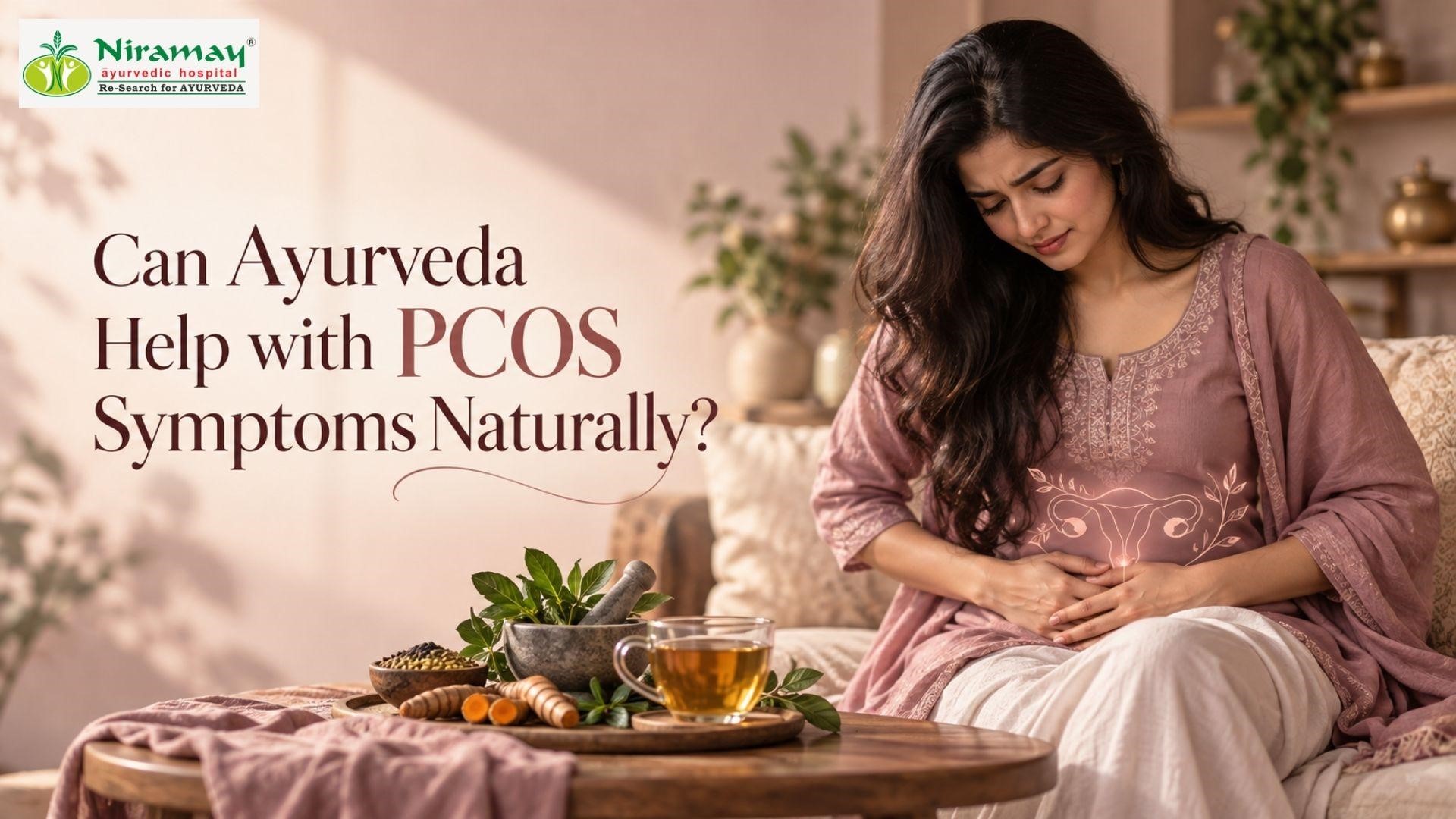
Irregular periods are only part of PCOS, and the new name reflects that. Polycystic Ovary Syndrome (PCOS) is now known as Polyendocrine Metabolic Ovarian Syndrome (PMOS), acknowledging that the condition can impact hormones, metabolism, weight, skin, hair, fertility and general health and not just the ovaries. For women searching for the best ayurvedic hospital in Surat for PCOS/PMOS treatment, the treatment should not be based on a single herb or home remedy. Ayurveda considers a person’s diet, digestion, sleep, stress, activity levels and metabolic health and may help in managing common PCOS/PMOS symptoms. Ayurvedic treatment generally is tailored to the woman’s individual symptoms, constitution and health history, with appropriate medical assessment and follow-up care.
A patient came in recently, convinced her thyroid was the problem. Her periods were irregular, her weight had stopped shifting, and at 28 she was suddenly dealing with breakouts again. It turned out to be PCOS. Another woman we had seen that morning had the same diagnosis, but her main concern was excess facial hair. No major weight issue at all.
That is what makes PCOS tricky. The label may be the same, but the symptoms and triggers can look very different from one woman to another. The real question is not just whether you are getting treatment for your condition, but whether the treatment is actually planned around how PCOS/ PMOS is showing up in that particular person.
What’s actually going on in the body with PCOS?
In Ayurvedic terms, PCOS is often linked with an imbalance in Kapha, with Vata playing a role in many cases too. Kapha is associated with heaviness, slower metabolism and weight gain, while disturbed Vata is more often connected with irregular or missed periods. Both can affect Artava Dhatu, which in Ayurveda relates to reproductive health and the menstrual cycle.
Digestion is another part of the picture. When Agni is considered weak, Ayurveda describes a build-up of Ama, or metabolic waste, which may gradually disturb the body’s normal channels and reproductive function. This is one reason two women with very similar scans may still be treated differently. The diagnosis may look the same, but the underlying pattern may not be.
How do we treat PCOS at Niramay Ayurvedic Hospital?
The first visit usually starts by piecing together the pattern rather than jumping straight to the diagnosis. The doctor may read the pulse, known as Nadi parikshan to understand what is currently out of balance, but that is only one part of it. Cycle changes, sleep, stress, weight history, skin concerns and digestion are all looked at alongside Prakriti and the changes that have developed over time.
That longer conversation matters because PCOS does not show up the same way in every woman. It is also why some patients look for the best Ayurvedic doctor in Surat when they want treatment that takes the full pattern into account, not just the scan report or hormone values.
What therapies come up for PCOS treatment?
Udvartana is often considered when weight gain and a heavier Kapha pattern are a major part of the case. It is a dry massage done with herbal powders and firm upward strokes. In practice, it is usually paired with changes in food and daily routine rather than treated as a complete solution on its own.
Virechana may be considered in selected patients as part of a Panchakarma programme, particularly when the assessment suggests a stronger Kapha-Pitta or Ama component.
Herbal medicines also differ from one patient to another. Shatavari, Ashokarishta, Triphala or different Guggulu preparations may be used, but not as a standard PCOS combination. A woman whose biggest issue is irregular periods may be treated quite differently from someone dealing mainly with weight gain or insulin resistance.
When PCOS has been present for years, treatment may need to be more structured rather than a few unrelated therapies here and there. At Niramay, an Ayurvedic Panchkarma Hospital in Surat, Panchakarma is planned in stages around the patient’s symptoms, constitution and current imbalance. Long-standing problems usually need that kind of gradual approach rather than expecting one short course to change everything.
What actually needs to change day to day?
Diet often does more of the work here than patients expect. The focus is usually on warm, freshly cooked food, with less refined sugar, processed food and, where needed, dairy. Nothing extreme, just changes that are realistic enough to keep up for months.
Movement matters too, but that does not always mean intense workouts. Brisk walking, yoga or simply being more active through the day can be a better starting point, especially when cycles are already irregular. Sleep and stress are looked at as well, because both can make the overall pattern harder to manage.
A lot of women reach Niramay Ayurvedic Hospital after searching for the Best Ayurvedic hospital in Gujarat, expecting the treatment to be mostly about medicines or therapies. In reality, the everyday part matters just as much. PCOS rarely changes because of something followed strictly for two weeks. What usually makes the difference is sticking with the right routine long enough for it to become normal.
When does this need a proper evaluation?
Periods stopping altogether, cycles that keep changing without any clear pattern, sudden severe acne, unexplained weight gain or increased facial hair are all signs worth getting checked properly. Fertility concerns in particular should not be left for months in the hope that they will settle on their own.
For anyone looking for the best Ayurvedic treatment in Surat for PCOS, the more useful question is whether the treatment is being planned around the way PCOS is showing up in that person. Someone struggling mainly with irregular cycles may need a very different approach from someone dealing with weight gain, insulin resistance or excess hair growth.
That individual assessment matters far more than simply putting every PCOS patient on the same standard protocol.
FAQs
Can periods actually become regular again with Ayurvedic treatment, or does it just manage symptoms?
For many women, yes, cycles do become more regular over time, though the timeline depends on how long the imbalance has been present and which dosha is mainly driving it.
How long before results for PCOS treatment by ayurveda show up?
Mild cases sometimes shift within a couple of months. Anything more established usually needs six months or more, generally through a structured course rather than one remedy alone.
Does every PCOS case need Panchakarma?
No. It’s usually reserved for cases with significant Ama or Kapha buildup. Milder presentations often do fine with diet, lifestyle change, and herbal support alone.
Can ayurvedic treatment be combined with medication I’m already on for PCOS?
Talk to your doctor directly about that. Any adjustment to existing medication should be gradual and supervised, not something changed independently.
Does the weight come off on its own once your PCOS improves?
Not instantly, but many women find it becomes noticeably easier to manage once the underlying Kapha and metabolic imbalance is actually addressed, alongside consistent diet and activity.